Simon McBride
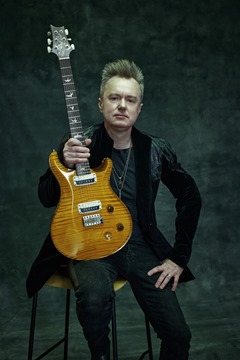
Since officially joining Deep Purple in 2022, Simon McBride has established himself as a distinctive presence as the band’s new guitarist. Following the release of Deep Purple’s studio album =1 in 2024, the band returned in 2026 with SPLAT!, their second album with Simon McBride on guitar.
On SPLAT!, the unique chemistry of Deep Purple comes through even more strongly as Ian Gillan, Ian Paice, Roger Glover, Don Airey, and Simon McBride developed the songs by playing together and exchanging ideas directly in the studio. The album features a diverse collection of tracks, including “Arrogant Boy,” which showcases the thrilling interplay between Simon’s guitar and Don Airey’s keyboards; “Diablo,” featuring a guest appearance by Keith Urban; and “The Only Horse In Town,” with its catchy riffs and memorable, highly melodic guitar solo.
In this interview, Simon McBride discusses the making of SPLAT!, the stories behind the individual tracks, Bob Ezrin’s role as producer, and his collaboration with Keith Urban. He also discusses the influence of Steve Lukather and Gary Moore on his playing, how he developed his own musical voice, and how he brings his own personality and identity to the music while being part of a band with such a long and extraordinary history as Deep Purple.
Interview / Text Mamoru Moriyama
Muse On Muse : Deep Purple made its 17th visit to Japan this April, and it was your second tour of Japan with the band. Looking back on the visit, what were the moments or memories that stood out most to you?
Simon McBride : I always enjoy Japan; the people are very friendly and efficient. I love the food, and we also met your prime minister which was very cool as she is a deep purple fan.
MM : I’d like to ask you about SPLAT!, your second studio album with Deep Purple. It feels as though the chemistry that began to develop on =1 has grown even stronger on this record. What were the band’s main goals and creative ambitions when making SPLAT!?
SM : We never really had any real goals for this record, there was no board meeting to say let’s make a heavy record or this type of record, we just got in the room and started playing the way it should be and the way it was done years ago, there’s a certain chemistry that happens when there’s 5 people in a room just playing together, I think the more you play together you are more comfortable around each other which leads to us being a bit more daring with our ideas.
MM : Could you tell us about the meaning behind the album title, SPLAT!?
SM : Well, if you want a more precise answer you would have to speak to ian Gillan as this was his idea, but basically if you imagine a fly hitting a car windscreen and goes splat, then that is the end of that flies currently reality, but what comes next is the question, could it be something better or worse, who knows?
MM : The artwork featured on the album cover and in the booklet is very distinctive. Could you tell us about the ideas or themes behind the artwork and what it is intended to represent?
SM : To be honest we have an art illustration company that looks after all a graphics, they take all their input from the lyrics, I generally don’t get too involved with that side of it.
MM : All of the songs on the album are credited to the entire band as songwriters. As with =1, did the songs begin as jam sessions before being developed into finished compositions?
SM : Yes everything in music starts out as jam session which is tweaked and changed and eventually becomes a song.
MM : Once again, the album was produced by Bob Ezrin. In your previous interview with MUSE ON MUSE about =1, you said, “Watching him take our ideas and breathe life into them in the studio was a real education.” Could you share a specific example of how Bob contributed to the making of SPLAT!?
SM :I can’t recall a specific song, but we are like an army and bob is the general, he keeps us in line and somehow is able to make sense of our madness, he is a great producer and a pleasure to work with.
MM : “Arrogant Boy” features some wonderful interplay between Don Airey’s keyboards and your guitar. Could you tell us how this song developed from its initial idea to the finished recording?
SM : This song started from a guitar solo spot I do live, I do this fast alternate picking thing, so that song fell together very quickly as we all just started playing and the parts came very easy, sometimes a song can come very easy. We never expected it to be single but once Gillan put his vocals on it, it was an easy decision.
MM : “Diablo” features a guest appearance by Keith Urban on guitar. How did his involvement in the track come about?
SM : Well Keith owns the studio we record in, so bob and me talked and decided it would be a cool idea to get Keith play on one of the tracks, he’s a great player, so why not.
MM : On “Diablo,” is the solo section structured as a musical exchange, moving from Don Airey to you, and then from you to Keith Urban? Was that arrangement planned from the beginning?
SM : Yeh I remember from steve lukathers first solo record there was a three way trade off between steve, steve stevens and jan hammer, and I thought that would be a cool idea, and it turned out great..
MM : What do you remember most about collaborating with Keith Urban on this track?
SM : Keith is a great guy, very easy to work with and had a great sense of humour.
MM : “The Only Horse In Town” is particularly memorable for its catchy guitar and keyboard riffs, as well as its concise yet highly melodic guitar solo. Could you tell us more about the writing and arrangement of this song?
SM : Initially ian paice walked up to don and said write a number one jokingly, and don immediately started playing that, so when then started to work it into a song, the solo section was something don was playing and I played along but then took it a but further.
MM : The guitar solos on tracks such as “Third Call,” “Jessica’s Bra,” and “The Rider” feature some wonderfully expressive phrasing. In previous interviews, you’ve spoken about the influence of Steve Lukather and Gary Moore on your playing, yet today you’ve clearly developed a distinctive style of your own. How did you go about finding and developing your own musical voice?
SM : It’s a question I can’t really answer, no musician can answer how they have got their own style, we are all just products of our influences of years and experience.
MM : Songs such as “Guilt Trippin’,” “SPLAT!,” and “The Lunatic” are driven by powerful, groove-oriented riffs. In Deep Purple, the guitar, keyboards, and bass all play important roles in creating the band’s signature riffs. Could you tell us about your own approach to writing riffs and your creative process?
SM : I usually write my best riffs as soon as I pick up the guitar, its usually the first thing I play, the key is not to think too much about writing something, just play and don’t be afraid to try new things and don’t be a afraid to screw up as generally the screw ups are the best riffs.
MM : Could you tell us about the main guitars, amplifiers, and pedals you used on this album?
SM : It’s simple, I use my live rig for the recording, which is the Engl custom heads and 4x12s in stereo, I use some pedals, not a lot on this record, just mostly reverbs and delays with a few other things like Octavia fuzz and phasers. I used one guitar for the whole thing, it’s a prototype from PRS guitars, it has no truss rod in the neck which makes a huge difference tonally and sustain wise.
MM : Deep Purple is a band with an extraordinary history and legacy. As its guitarist, how do you approach bringing your own musical identity and personality into the band’s sound while respecting that legacy?
SM : Well there’s certain things within the tracks we play live that you have to play and there are areas where I can be a little bit different but overall my sound is all over it, I will always sound like me, you gotta be yourself or else it wont work.
MM : Could you tell us about the band’s plans for the future? Fans in Japan are already looking forward to seeing Deep Purple return with SPLAT!.
SM : Yeh this year is extremely busy with touring, next year I don’t know yet, we will probably do some more but not a lot. If we get the opportunity to come back to Japan maybe in 2028 then we will be there.
MM : You’ve been performing at the highest level for many years. Looking at your playing today, what do you consider to be the most important aspect of your guitar playing? And finally, what advice or message would you like to share with the next generation of guitarists?
SM : I think the most important aspect of my playing is melody, I always try to keep it melodic like a singer with a little bit of flash in there, if you play too much technical flashy stuff then the audience don’t understand it. My advice for guitarists is always consider and put the song first, and ask yourself does this track need a solo? and if so, do I need to play a million notes or two?
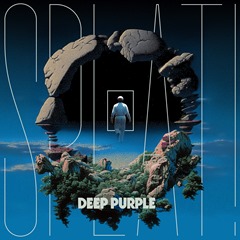
Deep Purple / Splat!
01.Arrogant Boy
02.Diablo
03.The Rider
04.The Lunatic
05.The Only Horse In Town
06.Sacred Land
07.The Beating Of Wings
08.Guilt Trippin’
09.Scriblin’ Gib’rish
10.Jessica’s Bra
11.Third Call
12.My New Movie
13.Splat!