Corrado Rustici
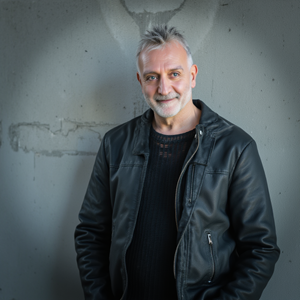
A legendary name from Italian prog’s golden era, Cervello are back at last . After carving out their mythic reputation with their one and only studio album Melos (1973), the band have remained beloved by listeners around the world long after their breakup—and now, 50 years on, they’ve released a brand-new album, Chaire.
Formed in early-’70s Naples, Cervello stood alongside Premiata Forneria Marconi (PFM) and Banco del Mutuo Soccorso, yet always carried a presence distinctly their own within the golden age of Italian progressive rock. Their 1973 debut—also their sole studio album—Melos is still spoken of today as one of the genre’s definitive masterpieces.
Produced by Corrado Rustici, this long-awaited new work draws on songs written between 1974 and 1983, painstakingly arranged and recorded over four years by the original members. The album also brings back the voice of late vocalist Gianluigi Di Franco, who passed away in 2005: using modern technology, his rare recordings have been restored and reintegrated so that his singing can resonate once again in the present day.
Here, we had a chat with Corrado Rustici about the making of Chaire.
Interview / Text Mamoru Moriyama
Translation Hiroshi Takakura
Muse On Muse : Cervello’s new studio album Chaire has just been released, your first studio album in about 50 years since your debut (and only) studio album Melos. What led you to make a new studio album at this point in time, after so long?
Corrado Rustici : After we got together to play in Tokyo in 2017, I mentioned to the other members of the band that I had some old recordings I had made with Gianluigi right after Melos. These were ideas that were meant to become the songs for a follow-up album. That’s when the whole process started. I gathered all the recordings and began fleshing them out, organizing them into different categories. After listening to the original ideas, I felt there was enough good material to justify recording an album and finally doing justice to these old ideas. They were meant to be released anyway.
MM : Could you tell us about the concept behind this album?
CR : The fascinating, almost archaeological discovery of these ideas was reason enough to put them all together. But there isn’t really a unifying concept that ties the songs together.
MM : We understand that Chaire is based on songs written between 1974 and 1983, and that the original members spent the past four years carefully arranging and recording the material. The late Gianluigi Di Franco, who passed away in 2005, also appears here as the lead singer, and his voice shines throughout the album. How did you integrate his vocals into this new work?
CR : After a couple of years spent reorganizing these ideas, giving them structure, and placing them in a solid musical context, we faced the question of who was going to sing these songs. The greatest fortunes that bless this album are mainly two.
The first is the fact that the actual writing was done between 1974 and 1983, and most of the material was originally recorded in various formats as early as 1974. Subsequently, Gianluigi and I revisited some of these ideas and re-recorded them with variations, both melodically and harmonically. That was incredible in itself, because today I couldn’t imagine writing songs in that same way anymore. I’ve changed as a musician—I’ve become a much better producer and arranger, and I wouldn’t be able to write songs in exactly the same fashion.
The second fortune is that, in the past few years, technology has advanced tremendously. It allowed me to take Gianluigi’s performances and reconstruct his voice, fleshing it out and making it sound almost on par with the basic tracks. We were very happy with the result.
MM : How did the arranging and recording process unfold? When preparing songs written between 1974 and 1983 for a modern release, were there any particular things you kept in mind?
CR : Nothing in particular, other than trying to preserve the purity of the original ideas and give them the right sonic context.
MM : Could you walk us through each track on the album? We’d love to hear how the songs came to be, the background behind them, and what you wanted to express in each piece.
CR :
“Chaire – Hallo”
This song was originally part of one long piece, which we later divided into two sections—one becoming the opening track of the album and the other the closing track. Both were part of a poem Gianluigi wrote for me. The lyrics are very oneiric and surreal, reflecting Gianluigi’s preference for expressing himself through imagery.
I set music to this long poem and, with the help of Antonio and Giulio, we created a beautiful piece of music. We felt it would be better served if divided into separate parts, which is what we did.
“Templi Acherontei”
This song always had a very defined melody and lyrics from the very beginning. The first part was already well-defined when we recorded the original demos. The second part needed development, as all I had was a guitar riff recorded as a memo to expand later with the band—which I eventually did… about 50 years later.
“La Seduzione di Chiaro Ulivo”
This song was also mostly written in 1974. The only section that was further developed was the middle instrumental part, which had originally been written as a separate piece but ended up fitting perfectly with the rest of the song.
“Reina de Roca”
This is a song Luigi wrote about his native island of Capri. It speaks of his love for the island and reminisces about his childhood—running around, growing up, and enjoying this beautiful, almost magical place. Over the years, we had different versions of both the lyrics and melody. Since it was becoming too long, I had to choose which parts of the lyrics to keep, but I think it turned out very nicely, and Luigi’s love for his island truly comes through. I believe the title was inspired by Pablo Neruda’s name for the island, which Gianluigi loved.
“Movalaide”
This was also one of the earliest pieces we recorded, later developed and integrated with another melody by Gianluigi. It ends with “Trasfigurazione,” a very daring piece based mainly on an idea by Antonio and arranged by all of us., which is a very daring piece, based mainly on an idea by Antonio, and arranged by us.
“La Danza dei Guardiani”
This piece is particularly interesting because the original idea came from an improvisation during the Pomigliano D’Arco live concert in 1973. Remigio Esposito, the original drummer, broke his snare head while we were playing, so we had to entertain the audience while he replaced it. Out of that 10–15-minute improvisation came a very interesting chord progression that we liked a lot. We started calling it “Bolero” and later decided to develop it for the new album. It’s one of my favorite pieces on Chaire.we wanted to develop for the new album. I think it’s one of my favorite pieces on the album.
“Chaire – Farewell”
See my answer to “Chaire – Hallo”
MM : How do you approach the guitar differently when writing/playing for Cervello compared to your solo work?
CR : It’s totally different. Over 50 years, I’ve changed a lot—as a guitar player, as a musician, and as a human being. I realized this when we first put together the Tokyo 2017 show and I had to relearn the parts from Melos, which I hadn’t played in that way for a very long time.
In 1973 I was 17 years old, full of enthusiasm but with limited knowledge. That said, I enjoy listening to myself from that period because I hear many creative approaches to musical problems. Still, I don’t write or play the way I did when I was 17. Hopefully, I’ve improved a little.
MM : What guitars, amps, effects, and pedals did you use on this album?
CR : I tried to keep things very simple and basic, to reflect what would feel like a natural follow-up to Melos and to use sounds that justified the guitar parts. If I remember correctly, I used my original Mesa Boogie Mark II, my Ibanez double-neck guitar, and mainly plug-ins for delay and reverb. I also used my signature guitar and my signature Sophia pedal on the solo in “Reina de Roca.”
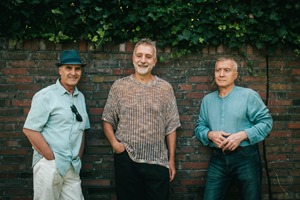
Photo by Michele Piazza
MM : The release also includes LIVE AT POMIGLIANO D’ARCO 1973. Could you tell us about that concert?
CR : Yes, this is the only concert that was recorded during the Melos tour. It was a very improvised recording—one of my friends, who was helping us with front-of-house sound, also had a two-track recorder and took the output directly from the mixer (I don’t even remember which one we were using). There was no soundcheck.
The recording was bootlegged in the ’90s and sold online for ridiculous amounts of money—I read figures like €6,000 for a copy. We wanted to give our fans an idea of what we sounded like in 1973, and I did my best to make the recording sound as good as possible, as a gift to those who’ve followed us for so many years.
I remember it was a sold-out show, co-headlining with Rovescio della Medaglia, and we had a great time playing the songs from Melos for the audience.
MM : A newly remastered edition of your 1973 debut album Melos is also being released. Even today, it’s strongly supported by devoted fans as a classic of Italian prog. How do you feel about that?
CR : We are very grateful and surprised by the support we’ve received over the past 50 years. That was the main reason I wanted to rescue and remaster Melos once again—as a gift to all our fans.
MM : What are your plans going forward?
CR : We’re not sure yet. There are still ideas we didn’t use on this album that are waiting for the right moment to come to life. We’ve received many requests for a possible tour or another release. We’ll see what the future brings.
MM : Finally, please leave a message to your fans?
CR : Thank you for all your support and your interest in these five Neapolitan kids who wanted to do something different and reach for the impossible dream of finding relevance in the world. Your kindness has helped us achieve that, and we can never be grateful enough. We hope you enjoy Chaire, and please let us know what you think through our social media channels. Thank you.
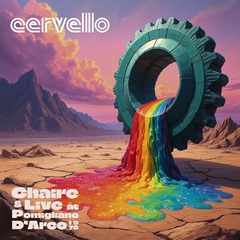
CERVELLO / Chaire + Live at Pomigliano D’Arco 1973
CHAIRE:
Chaire – Hallo
Templi Acherontei
La Seduzione di Chiaro Ulivo
Reina de Roca
Movalaide incl. Trasfigurazione
La Danza dei Guardiani
Chaire – Farewell
LIVE AT POMIGLIANO D’ARCO 1973:
Intro
Canto del Capro
Scinsione (T.R.M.)
Euterpe
Melos
Progressivo Remoto
Corrado Rustici – guitar, keyboards, vocals
Antonio Spagnolo – bass, acoustic guitar, recorder, vocals
Giulio D’Ambrosio – flute, saxophone, vocals
Gianluigi Di Franco – lead vocals
With Roberto Porta on drums.